Landman Season 2 Blasted by Critics and Fans for Demi Moore and Other Female Stars’ ‘Annoying’ Roles

The newest season of Taylor Sheridan’s latest Western drama has been sparking fan interest in recent weeks, and now critics are having their say. The Billy Bob Thornton–starring series has been receiving surprisingly positive reviews compared to some of Sheridan’s other post-Yellowstone shows, but one aspect of the series seems to have rubbed both fans and detractors the wrong way: its female characters. Several reviewers took Landman’s second season to task for its handling of the major female roles, with special derision coming in for parts played by Demi Moore and Ali Larter, though the derision was reserved for the writing, which is exclusively credited to Sheridan.
Thornton, who recently called his three-year marriage to Angelina Jolie part of the ‘greatest times’ of his life, stars on Landman as Tommy Norris, a top executive at a fictional oil company who is tasked with negotiating the mineral rights for land it plans to drill on.

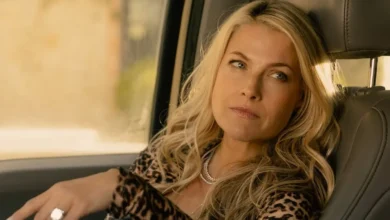
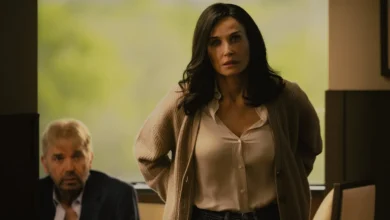
Writing for Slate, Rebecca Onion outlined what she described as ‘Landman’s woman problem.’ She wrote that Moore’s character Cami, the wife of Tommy’s late colleague (played by Jon Hamm), now has ‘actual lines and scenes,’ but the other major female stars have been given substandard material to work with. Onion singled out Tommy’s ex-wife Angela Norris (played by Larter) and his daughter Ainsley (Michelle Randolph) as weak links in the latest season because of Sheridan’s alleged habit of forcing them to spout out his ‘culture-war rant[s] … disguised as a scene between characters on a television show.’
To make matters worse, she accused Sheridan of writing Ainsley as a nitwit in a scene in which she cluelessly tries to impress a hard-nosed college admissions officer (who isn’t treated with any more sympathy than Ainsley). Slate’s review went on to criticize Larter’s character for being cartoonishly moody and reactive compared to Tommy, who is portrayed as being cool and collected.



Despite his sometimes cruel comments about Angela, she and Tommy get remarried in the second season. Salon’s Melane McFarland was more positive on the new season, but she wrote that, in the universe of Sheridan’s TV shows, ‘women are divided between ball-busters with predatory business instincts that match or exceed those of their male peers, or expensive sexual accessories.’
She wrote that the women of Landman are further divided by hair color, ‘because in Sheridan’s Texas, God made blondes to drive rich old men into poverty,’ whereas brunettes ‘get things done.’ McFarland also noted the portrayal of Tommy’s daughter Ainsley as a moron, joking that she ‘would lose a grade-school spelling bee to a bag of hair extensions.’
Ultimately, she wrote the the show amounts to trashy fun, even if it fails at being exceptional television. Writing for RogerEbert.com, Clint Worthington wrote that the women of Landman are both its ‘greatest strength and weakness.’
Worthington accused Angela and Ainsley of being showcases for Sheridan’s ‘psychosexual hangups,’ and he wrote that many of their scenes could play as ‘top-tier comedy’ if the characters weren’t so ‘regressive.’

By contrast, Decider determined that the second season of Landman was worth streaming partially because of the greater presence of its female characters this time around. Collider was also mildly optimistic about the second season based on its first three episodes, though critic Jeff Ewing noted that Larter and Randolph’s characters don’t meaningfully ‘evolve.’
In a relatively positive review for The New Yorker, Kyle Chayka dubs Larter’s character a ‘Manic Pixie Dream MILF’ and notes that she has ‘many hit-or-miss one-liners’ contrasting with the show’s more naturalistic dialogue. In a modestly positive review for the Houston Chronicle, Cary Darling suggested that Larter and Randolph’s characters are ‘meant to be send-ups of stereotypes about status-obsessed, brand-conscious Texas women.’ However, they instead come across a ‘one-dimensional cartoon characters, not people,’ with Larter’s character being particularly ‘underwritten.’