I watch a lot of television, which means I’ve witnessed my fair share of the bleakest moments the medium has to offer. Carol telling a child to “look at the flowers” before shooting her in The Walking Dead. The shock of the Red Wedding in Game of Thrones. The basement tape in Mare of Easttown. Hank’s mid-sentence execution in Breaking Bad. Stringer Bell finally running out of places to turn on The Wire. The entirety of The Leftovers.
Yet, somehow, this week’s episode of Taylor Sheridan’s Yellowstone spin-off, Dutton Ranch, managed to match them all in terms of pure television devastation.
The plot is classic Sheridan tragedy: Rip and Beth drop a small fortune on a prize bull, only for that bull to unknowingly infect their entire herd with Foot-and-Mouth Disease (FMD). Because FMD is an agricultural death sentence, the entire herd has to be put down. The visual is brutal. They use an excavator to dig a massive trench, lead the herd down into the pit, and then Rip systematically shoots hundreds of cattle to death with a rotation of shotguns. It is agonizing, slow-motion TV. Once the dust settles, they dump tons of powdery white quicklime over the carcasses and bury them.
Naturally, this being the Dutton universe, the logistics are warped by Hollywood dramatic license and the family’s pathological need for secrecy. In the show, the psychological toll of this “depopulation” effort is contained to Rip, Beth, and a couple of tight-lipped bunkhouse employees who sweat out the entire slaughter in a single day to keep it hidden from authorities, presumably to prevent the state from permanently locking down the ranch.

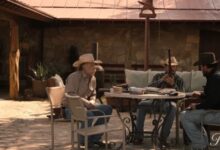

In the real world, you can’t exactly hide a trench the size of a crater, and the response would look a lot different today. For starters, FMD is one of the most terrifyingly contagious viruses on the planet. The moment a single blister showed up, the USDA and state veterinarians would swoop in, establish a miles-wide quarantine zone, and completely freeze local transit.
The actual execution would change, too. Today, forcing a herd into a dark dirt pit would cause a chaotic, trampling panic; real regulatory crews use a squeeze chute right next to the trench, deploying a captive bolt gun to achieve instantaneous, humane brain death before rolling the carcass in. And that quicklime they tossed in? It’s an old-school remedy meant to essentially cook the virus and deter scavengers, but today they actually discourage it because it halts the natural bacteria needed for decomposition. Today, the USDA is far more likely to compost the herd under massive hills of woodchips and straw, letting natural microbial heat do the sterilizing.
The show did hit upon truth, though: the severe human cost. In real outbreaks, the psychological trauma inflicted on the farmers and veterinarians forced to execute these animals leads to staggering rates of PTSD. The USDA now routinely deploys mandatory mental health crisis counselors alongside their biosecurity teams.
Taylor Sheridan is well known for his grim plotlines — see also 1883 or 1923 — but blasting an entire herd of cattle with a shotgun feels exceptionally beyond the pale. Fortunately, American ranchers haven’t faced this specific nightmare in reality since the last U.S. outbreak in 1929. But the global history is real, and it is catastrophic. In 2001, a massive FMD outbreak in the United Kingdom forced the culling of over six million cattle, sheep, and pigs, turning the British countryside into a literal smoke-filled graveyard of open-air pyres. A few years earlier, a 1997 outbreak in Taiwan completely decimated the island’s multi-billion-dollar pork export industry overnight.
It is a fascinating, deeply morbid corner of agricultural history. And for history nerds and Dad TV enthusiasts alike, it makes for incredibly compelling television, if you have the stomach for it.